If you have ever stepped into a modern office or joined a remote project team, you have likely heard people tossing around words like Scrum or Sprints as if everyone should naturally know what they mean. For the uninitiated, it can feel like listening to a foreign language.
Agile is not a single rulebook. It is a mindset focused on being flexible and collaborative. Instead of trying to plan a massive project from start to finish in one go, teams break work into small chunks and adjust as they go. While it started in software development, you will now find these methods used in everything from marketing to construction.
Here is a plain English breakdown of the most common terms you will encounter.
The Core Concepts
- Agile: The overarching philosophy. It prioritises people and reactions to change over rigid documentation and following a fixed plan.
- Scrum: The most popular framework or set of rules within Agile. If Agile is the sport, Scrum is a specific league with its own defined positions and match lengths.
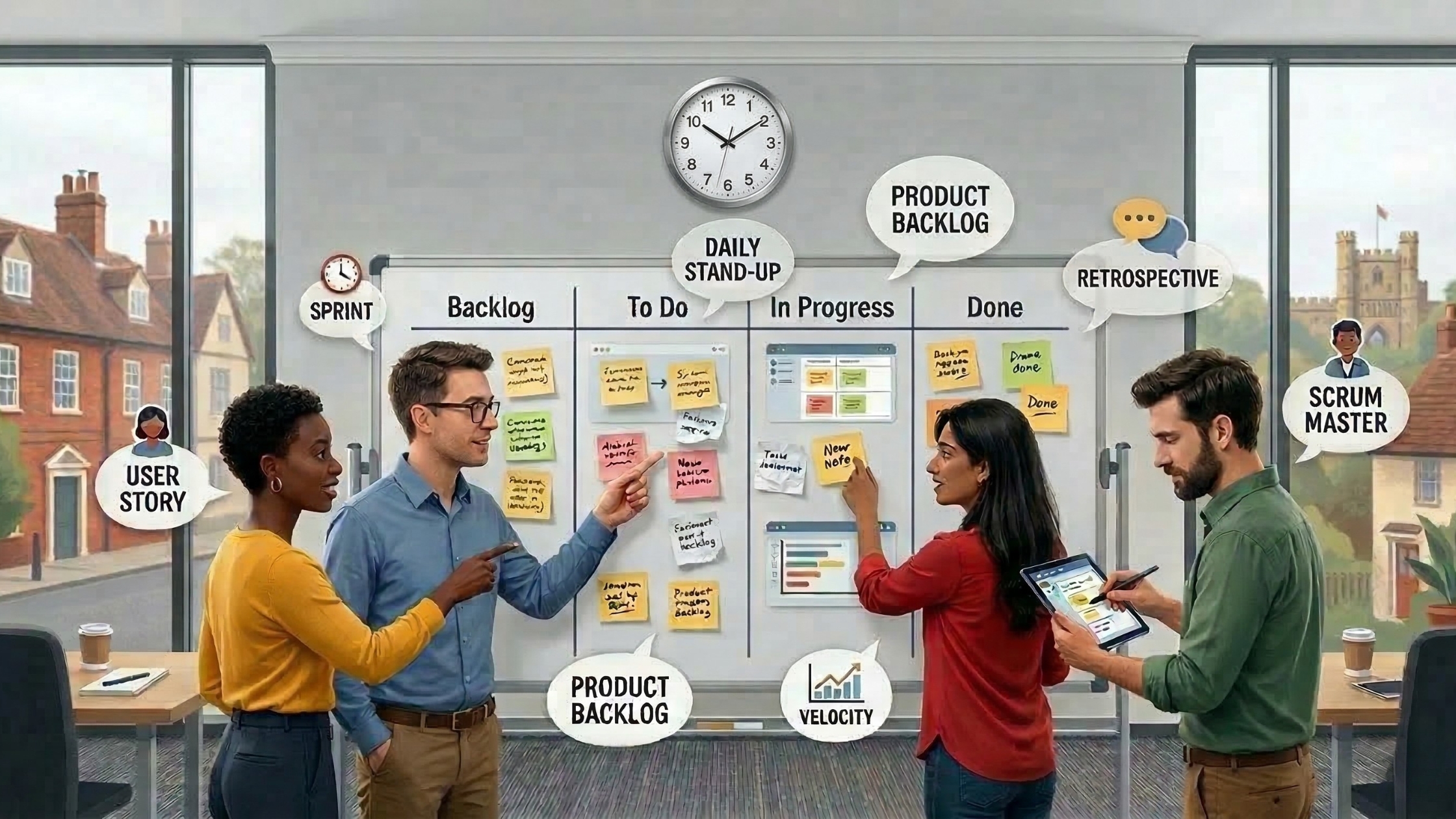
- Kanban: A visual method of managing work. You will usually see this as a board with columns like To Do, In Progress, and Done. It focuses on keeping work flowing smoothly without necessarily using fixed time blocks.
Planning and Tracking
- Product Backlog: Think of this as the master to-do list for the entire project. It contains every feature, fix, and requirement, usually ranked by what is most important to the customer.
- Sprint: A short, fixed window of time, typically one to four weeks, where the team focuses on a specific set of tasks. The goal is to have something finished and usable by the end.
- Sprint Backlog: A smaller list of tasks pulled from the top of the Product Backlog. This is what the team commits to finishing during the current Sprint.
- User Story: A simple way to write down a requirement so the focus stays on the person using the product. It usually sounds like: "As a [user], I want to [action] so that I can [benefit]."
- Velocity: A metric used to see how much work a team usually gets through in a Sprint. It helps with planning future work based on what has actually been achieved in the past.
- Burndown Chart: A simple graph showing how much work is left versus how much time is remaining in the Sprint. It is a quick visual way to see if the team is on track.
The People Involved
- Product Owner (PO): The person who represents the customer. They decide what features are most valuable and keep the Product Backlog organised.
- Scrum Master (SM): Not a boss, but a facilitator. They make sure the team follows Agile principles, remove any obstacles getting in the way, and coach everyone on how to work better together.
- Development / Delivery Team: The people actually doing the work. In an Agile world, they are self-organising, meaning they decide together how to tackle the tasks in the backlog.
The Key Meetings
- Daily Stand-up: A quick 15-minute daily check-in. The team syncs on what they did yesterday, what they are doing today, and if anything is stopping them from making progress.
- Sprint Review: This happens at the end of a Sprint. The team shows off what they built to stakeholders and gathers feedback to help plan the next steps.
- Sprint Retrospective: A private meeting for the team to look inward. They discuss what went well, what was frustrating, and how they can improve their process for the next cycle.
At its heart, Agile is about cutting through the complexity to focus on what actually matters: delivering value and supporting the people doing the work. While the terminology can feel a little overwhelming at first, these concepts are simply tools designed to help teams stay organised and adaptable in a fast-paced world.
By mastering this jargon, you are not just learning new words; you are gaining a better understanding of a culture built on continuous improvement and transparency. Whether you are part of a Scrum team or just collaborating with one, keeping these definitions in mind will help you communicate more effectively and keep your projects moving in the right direction.